


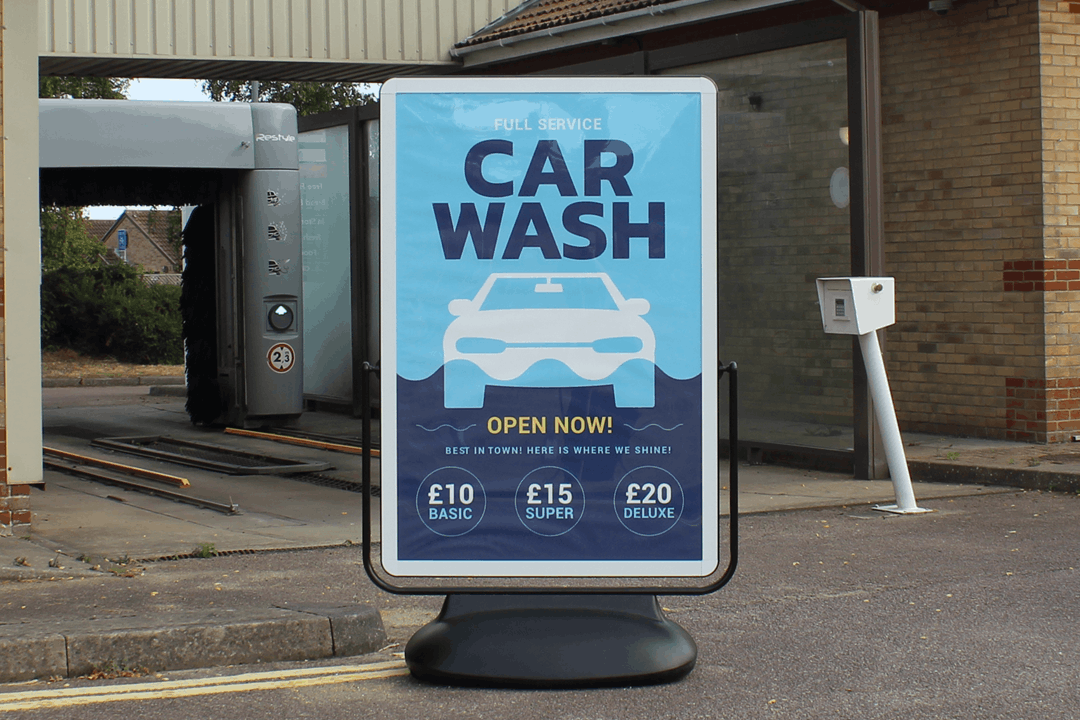
signRainfall levels vary widely across the UK. Wind direction and building height influence how much stress exterior signage faces. Proximity to open water can also increase that exposure further.
Commercial property owners and shop operators cannot treat the UK climate as exactly the same throughout. Variations in localised climates create challenges that affect print finish and fixings. Overall sign performance can then suffer as a result.
How UK Microclimates Affect Exterior Sign PerformanceMarketing Team
Coastal areas such as Swansea experience persistent moisture, driven in from the Atlantic. Meanwhile, sheltered towns that are inland may face different weather patterns. Driving rain can strike signage at an angle for extended periods and that repeated exposure places strain on edges and mounting points.
In urban areas, narrow streets channel wind and tall buildings can create zones of extra pressure. Shopfronts positioned on corners also receive heavier exposure than recessed entrances.
Specifying exterior signage for wet conditions requires a supplier who understands those local patterns. UK suppliers who make weatherproof outdoor sign materials must account for water ingress at seams and around fixings. Poor material selection increases the risk of surface breakdown and graphic distortion.
In regions that experience high rainfall, exterior signage also needs careful sealing where the panels join. Moisture that enters at unprotected edges can spread beneath printed surfaces.
In some cases, enhanced moisture-resistant formats offer additional protection where constant spray or runoff from roofs presents ongoing saturation. Selecting the correct format depends on how the sign will interact with surrounding structures.
Which Materials Withstand Persistent Rainfall in Coastal Cities?
Material choice becomes critical in locations exposed to sustained rainfall. Aluminium composite panels provide rigidity while marine grade finishes may suit sites which are close to the sea, where the salt content in sea air accelerates corrosion.
A well-specified weatherproof outdoor sign should incorporate sealed edges and compatible fixings. Stainless steel fittings reduce the likelihood of corrosion marks appearing on surrounding surfaces.
Printing processes also influence how a sign performs. Inks must bond securely with the selected panel surface. Lamination adds a further barrier to prevent moisture from entering, as long as the edges are trimmed correctly.
Weatherproof signage must also address temperature swings as expansion and contraction can occur across seasons. If tolerance is not built into the design, performance issues may occur.
What Design Features Protect Shopfront Signs in Heavy Rain?
Overhanging fascias offer partial shelter, while flat mounted panels receive full impact when there’s rain.
When selecting the best shopfront sign for wet conditions you should consider the slope and drainage. A slight tilt can encourage runoff, preventing pooling at the lower edge.
Waterproof signs installed in regions with constant downpours benefit from raised standoff fixings. Allowing airflow behind the panel reduces trapped moisture against masonry.
Edge detailing also requires attention. Open seams increase vulnerability to water penetration. Protective trims help divert water away.
Guidance for installing exterior signage highlights the importance of sealing around drilled holes. Even minor gaps allow moisture to enter into the substrate beneath.
How Should Retailers Specify Signs for High Rainfall Areas?
Businesses need to consider the average rainfall and prevailing wind direction of their intended location when specifying signage requirements.
Choosing waterproof signs may prove appropriate where constant moisture defines the environment. In contrast, a sheltered arcade might only require standard weatherproof signage.
Consulting with manufacturers will help in selecting the correct solution for each location.
Access to cleaning should also be considered. The sign will wear quicker if dirt accumulation isn’t addressed through routine maintenance schedules.
Are Inland Microclimates Less Demanding on Outdoor Signage?
Inland towns do not escape microclimate effects. Valleys trap cold air and tree cover retains moisture on surfaces for longer periods following rainfall.
A shop located beneath mature trees may experience continuous drip from foliage even after rainfall has stopped. That extended dampness challenges signage performance.
Weatherproof outdoor signs installed in such places must resist repeated moisture cycles. Selecting durable outdoor signage for British weather reduces staining.
Some businesses assume inland locations require lower specification but that is not always accurate.
What Ongoing Care Improves How a Sign Performs?
Maintenance practices contribute to overall sign condition. Regular inspection identifies seal failure or early corrosion before it gets worse. Gentle washing prevents debris from trapping water against surfaces.
Periodic checks around fixings help protect exterior signage systems and reapplying sealant where necessary keeps water from entering vulnerable points.
Replacing panels promptly, when graphic begins to fade, avoids water tracking beneath lifting edges. Investing in waterproof signs reduces the risk of repeated replacement.
Do Microclimates Change How Businesses Approach Exterior Branding?
Site-specific thinking is required in areas affected by local climate variation. A standardised approach does not suit the varied weather patterns seen across the UK.
Manufacturers that are experienced in weatherproof outdoor sign materials in the UK can guide retailers through suitable panel choices and installation.
Well-planned weatherproof signage that is tailored to the conditions around a certain area withstands persistent moisture more successfully than generic solutions.
Swansea, with its high rainfall levels, demonstrates how location shapes sign performance. Businesses protect their investment, and present a consistent brand image despite challenging weather, when they factor microclimate data into their specification.
Contact us to discuss the most suitable options for waterproof signs designed for your local conditions.


