


At Signwaves we take great care in selecting the right material for the job, and in the business of designing and manufacturing durable outdoor signage that performs in all weathers, and where safety and reliability counts, polycarbonate has an important role to play.
What Is Polycarbonate Plastic?
Polycarbonate is an incredibly versatile high-performance thermoplastic that is known for its exceptional strength, durability, and clarity. It is often used as a substitute for glass due to its light weight and shatter resistance. A standout material that is virtually unbreakable with an impact resistance up to 250 times greater than glass (whilst being half the weight) and 30 times stronger than acrylic (e.g. Perspex).
Key Features and Benefits of Polycarbonate:
-
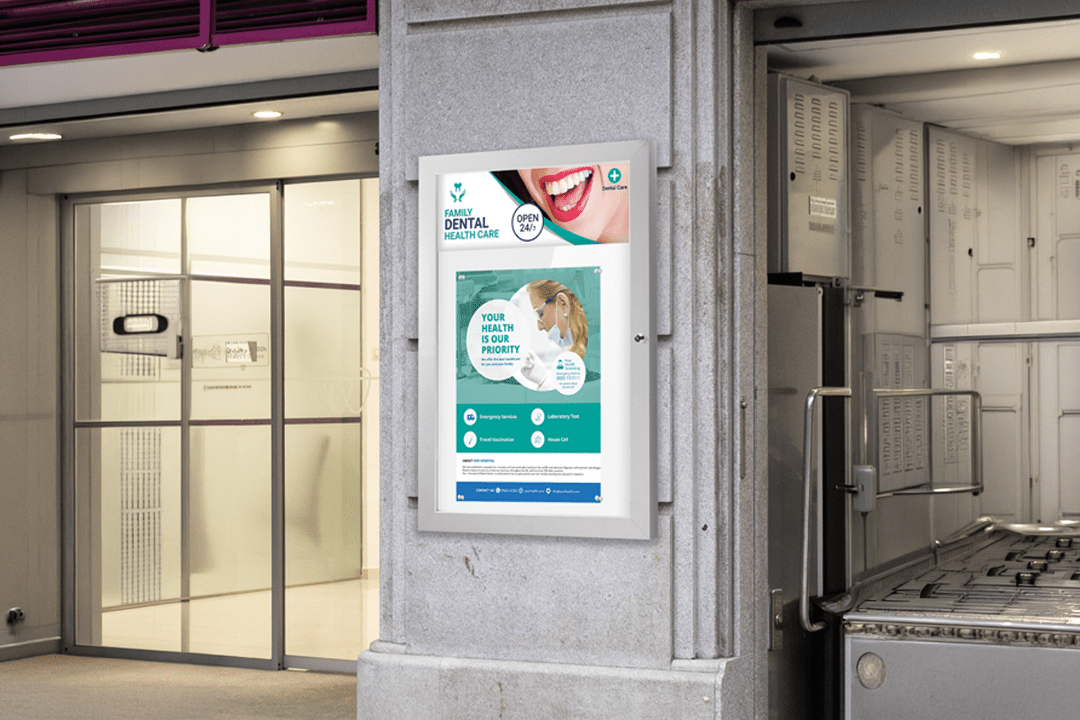
Extreme Impact Resistance: It can absorb significant energy without shattering or cracking, making it the standard for safety applications such as bulletproof windows (for example banking tills), riot shields, helmet visors and goggles. At Signwaves it is the first choice for glazing in permanent displays where vandalism may be a risk, such as in our Slimlok Poster Cases, Slimlok Noticeboards and Slimlok Menu Cases.
-
Optical Clarity: It transmits up to 88–90% of visible light, rivalling glass in transparency but without the brittleness. For products in the business of displaying a customer’s promotional print, without fear of compromising a customer’s branding or clarity of message, polycarbonate ticks the boxes. There is no better example than in the use of polycarbonate glazing in our large format Sentinel Forecourt Poster Signs, used by leading supermarket chains, petrol forecourt operators and out-of-town retailers throughout the UK and beyond.
-
Thermal Stability: Polycarbonate maintains its structural integrity across a wide temperature range, typically from -40°C to +130°C. It can withstand high heat without deforming, a property which makes it ideal for the likes of microwave-safe cookware, electronics applications, automotive parts e.g. headlights, and in construction materials exposed to extreme conditions. This is also a valuable feature in any poster display product exposed to direct sunshine, especially when the printed poster beneath is made up of dark heat absorbent colours. This can be further exaggerated in a display mounted to the inside of a shop window, so it is no surprise to see polycarbonate featuring in our larger size Headliner window poster display.
-
Design Flexibility: Being a thermoplastic means it can be easily moulded, bent (even at room temperature), and thermoformed into complex shapes without losing its properties. An excellent example of this is our injection moulded Pivot Gripper for showcard mounting. No other material would provide the balance of strength, light weight and optical clarity which makes polycarbonate the perfect manufacturing choice for this display accessory application.
-
Lightweight Nature: Being roughly 50% lighter than glass, it reduces structural load in building projects and makes it easier to handle and install, it also improves fuel efficiency in the aerospace and automotive industries. It’s high strength to low weight ratio made it the ideal choice for the glazing in our Cyclone Forecourt Poster Sign with its unique counter-balanced display panel. Polycarbonate’s high strength to weight ratio also makes it the material of choice for the poster pocket panels in our Swinger Pavement Signs.
-
Natural UV Shield: It is inherently UV-resistant, blocking nearly 99% of harmful ultraviolet radiation, which is why it's popular for greenhouses and sunglasses.
-
Fire Safety: It is a self-extinguishing material with a high fire rating (B1), meaning it stops burning as soon as a direct flame is removed.
-
Recyclability: Polycarbonate is fully recyclable and, unlike some plastics, can be reprocessed multiple times without significant loss of quality.
Primary Recommended Uses:
-
Vandal-Prone Areas: Due to being virtually unbreakable (up to 250x stronger than glass), it is the premier choice for bus shelters and urban advertising where vandalism is a concern.
-
High-Traffic Public Spaces: Recommended for airports, stations, hospitals and schools where accidental impacts are likely.
-
Safety & Emergency Signage: Often mandated for fire exit and hazard signs in industrial settings because it is self-extinguishing and impact resistant.
-
Illuminated Outdoor Signage: Ideal for lightboxes and channel letters in regions with extreme weather (hail or high winds) or high temperatures, as it remains stable at temperatures up to 130°C.
-
Thermoformed Signage: Preferred for 3D or dimensional signs (e.g. the McDonald's "M") because it is easier to shape without losing structural integrity.
Fascinating and Diverse Real-World Applications:
-
Bullet Resistance: Thicker laminated sheets are used to create bullet-resistant "glass" for banks, armoured vehicles, and government buildings.
-
Military Jets: The cockpit canopy of the F-22 Raptor fighter jet is made of high-quality polycarbonate—the largest single-formed item of its kind.
-
Medical Innovation: It is used in medical devices like incubators and dialysis machines because it is durable, transparent, and can be sterilised with steam or radiation.
-
Olympic Record: The roof of the Olympic Stadium in Athens (2004) was constructed using 25,000 square metres of polycarbonate, making it the world's largest stadium roof of its type


