


Walking onto a trade floor before an event usually feels frantic. Organisers set strict loading windows that force businesses to build professional displays in a fraction of the time they actually need. When you arrive at 6:00 AM, your sales team should focus on talking to customers, not struggling with heavy metal frames.
Those early hours set the tone for the entire day. Any delay getting your graphics up means you look disorganised when the doors open. Giving your staff a simple way to build their environment completely changes the energy of the stand. We have looked at how using the right hardware solves this common industry problem.
How Do Roller Banners Reduce Event Setup Time?
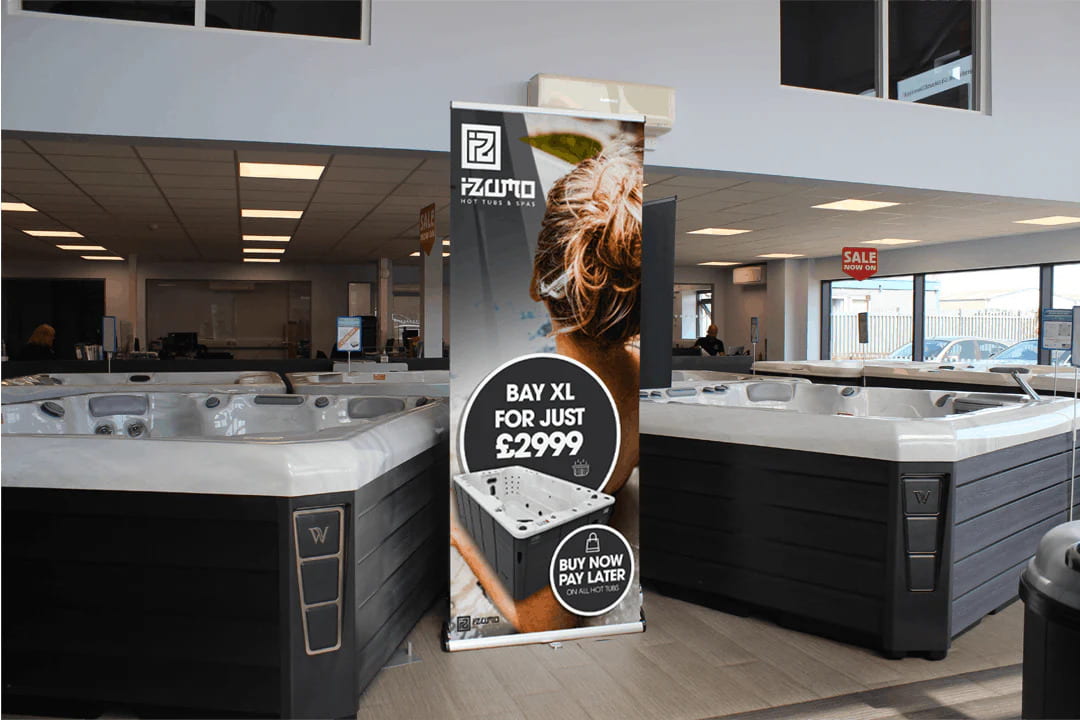
Roller banners reduce event setup time since the graphic is pre-installed inside a spring-loaded base unit, making them a strong quick setup option for busy event environments. In most cases, one person can set up the display in moments by pulling the graphic up and securing it with the support pole.
There are no loose frame parts to assemble on site. A staff member unfolds the stabilising feet, raises the graphic, and secures it in place. That keeps setup straightforward in a busy venue environment and reduces the chance of missing pieces slowing the team down.
Staff also do not need specialist training to deploy the unit properly. That helps create a more consistent presentation across events, even when different team members are handling setup.
Venues often bill for extra access time outside of the standard trading window. Every minute spent piecing together rigid wall panels increases staffing costs and early access fees.
To make setup faster, review these two pressure points first:
- Replace display structures that need multiple people to carry or assemble.
- Reduce the number of separate frame components by using self-contained banner units.
Are Roller Banners Good For Events?
For many exhibitors, yes. Roller banners are a practical first-choice event display since they are lightweight, easy to carry, and quick to position once you reach the hall. They are also portable for exhibitions where speed and flexibility matter. Unlike heavier exhibition walls, they do not usually need multiple staff members or specialist transport.
For teams that need a compact display built around fast setup and easy handling, the Rollsby roller banner offers a practical option for exhibitions, promotions, and other events.
They also give you more flexibility on the day. Fixed structures are harder to reposition once the stand is built, while roller banners let you adjust messaging, entrance points, or product emphasis around the way people are actually moving through the space.
That flexibility matters on smaller stands in particular. Using several banner units instead of one large backdrop can make the space feel more open and easier to navigate. It also gives you more control over how branding appears from different angles.
Moving materials from a car park to a venue hall is often one of the most frustrating parts of the day. Portable equipment helps reduce that strain before the event even begins.
How Durable Are Roller Banners For Repeated Use?
That depends on the quality of the hardware. Internal tension mechanisms, base construction, and pole strength all affect how well a banner copes with frequent travel and repeated use. Lower-quality units often suffer from snapped springs or cracked aluminium bases after only a small number of outings.
If the hardware is going to be used across exhibitions, retail promotions, or campaigns, it needs to hold up to regular transport, setup, and storage. For businesses looking for easy setup roller banners in the UK, build quality matters just as much as the printed graphic. The printed graphic only does its job if the display still performs properly on the day.
Signwaves has more than 30 years of experience designing and manufacturing display solutions for real commercial use. We manage design, print, manufacturing, and fulfilment in-house, which gives us much closer control over product consistency.
That matters with roller banners since reliability depends on the full unit working properly, from the cassette and pole to the printed graphic itself. It also matters for stability. In busy environments or on uneven surfaces, a solid base and sensible weight distribution make a real difference in keeping the unit steady when people are moving past it.
Should You Replace Heavy Exhibition Displays With Roller Banners?
If event setup is slower than it needs to be, your display hardware is worth reviewing.
Start with the equipment you currently rely on. If it takes multiple people to carry, assemble, or reposition, there may be a more practical alternative. Self-contained roller banners can reduce handling time, simplify transport, and make stand setup easier for smaller teams.
They will not replace every exhibition structure, but they can remove a lot of unnecessary effort where speed, portability, and ease of use matter most.
Common Roller Banner Issues To Watch For
Why Does A Roller Banner Lean Forward?
A forward lean happens when the supporting pole is not seated properly into the rear mounting bracket. It can also happen if you forget to twist the stabilising feet out to a full ninety-degree angle. This shifts the centre of gravity and makes the unit unstable.
Rough handling during takedown also causes problems. Dropping a tension rod can warp the aluminium edge, which prevents the pole from sliding in. Always rotate the base feet out fully before you pull the graphic up to keep the stand vertical.
Can You Replace A Roller Banner Graphic In An Existing Base?
It is possible to dismantle an aluminium cassette to swap the printed graphic, but it is rarely the most practical option. The labour involved and the risk of the internal spring uncoiling make it far less efficient than buying a new unit.
The spring also wears down over time. By the point a marketing message is out of date, the internal housing may already be nearing the end of its reliable lifespan. A new factory-tensioned system is usually the safer and more dependable choice.
Can Carpet Or Uneven Floors Affect Roller Banner Stability?
Yes. Deep carpet changes how a display unit balances compared to flat concrete, and thick pile can cause metal feet to sink slightly.
If you are on a soft floor, placing a flat piece of rigid card under the feet helps spread the load. It also helps to avoid placing the base over taped cable runs or floor joins, since small surface changes can make the top of the banner move more than expected.
Choose A Roller Banner System Built For Real Commercial Use
Faster setup changes more than the first half hour of an event. It reduces pressure on your team, makes transport easier, and helps you present a more professional stand from the moment the doors open. For exhibitions, retail promotions, and branded events, get in touch with Signwaves. We can help you choose a roller banner system built for practical transport, quick setup, and repeated commercial use.


