


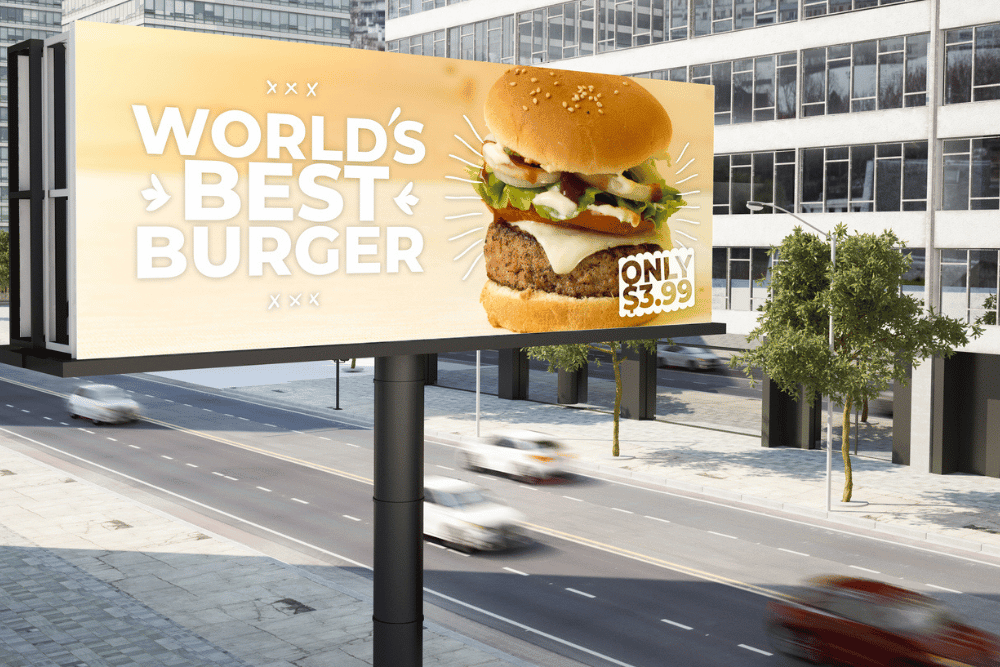
Customers often see a business before they understand why they should enter it. The shopfront may be visible, but the current offer, service, or reason to stop can still be missing from the final approach.
An ads board helps close that gap. Positioned at the right point, it gives passing customers one clear message before they walk beyond the entrance, choose a neighbouring business, or continue through the high-street.
The "last 20 metres" is not a fixed measurement for every location. It is a useful way to think about the final part of the customer journey, when the business is already in view, but the decision is still open.
At Signwaves, our pavement signs and A-Boards help retailers, hospitality venues, forecourts, and service businesses communicate at street level. The right ads board can turn a visible frontage into a clearer reason to act.
Why does the final approach matter for an outdoor advertising board?
Most sites contain several moments where customers can still change direction. A pedestrian may compare two cafés. A driver may decide whether to enter a forecourt. A visitor may look for the correct entrance or collection point.
Permanent signs usually confirm the business name. An ads board can communicate what matters today: a promotion, an appointment service, an available table, a collection point, or a time-sensitive reason to enter.
The final approach matters because the message arrives close to the action. Customers do not need to remember it for several minutes. They only need to understand it quickly enough to take the next step.
An effective advertising board should therefore support a decision rather than simply repeat the logo already visible above the door.
Where should an advertising board appear along the customer route?
The best position is not always directly outside the entrance. Businesses should place an ads board where customers first need the information, not where the unit is easiest to store.
Three areas are particularly useful: the approach point, where the customer first sees the site and needs a reason to pay attention; the threshold, where the decision to enter is made; and the dwell point, where queues, waiting areas, or collection zones create time for a secondary message.
A roadside site may need the first message further away. A high-street shop may need side-angle visibility before pedestrians reach the frontage. A hospitality venue may need a pavement sign where groups pause and compare nearby options.
Walking the route from the customer's direction often reveals that a sign visible from the doorway is difficult to see from the actual decision point.
What should the board say at each decision point?
The message should change according to where the customer sees it.
At the approach point, keep the wording short. A product category, opening message, or strong offer is often enough. At the threshold, the board can answer a practical question such as "Walk-ins welcome", "Order here", or "Collection at rear".
At a dwell point, customers may have more time to process detail. This can suit menu highlights, service information, or a second promotional message.
An ads board becomes less effective when one layout tries to handle every stage at once. Several competing messages reduce clarity and make the customer work harder to understand what the business wants them to do.
The strongest boards usually focus on one immediate action and leave supporting information to window displays, printed posters, or staff interaction.
Which pavement sign suits different sites?
Different environments place different demands on the display. Available pavement space, wind exposure, poster-change frequency, and daily handling should influence the product choice.
The compact Eco Swinger® can suit smaller frontages where space is limited but movement can help attract passing attention.
The Swinger® 2 offers a larger swing-sign format for retail, hospitality, and service environments that need a dependable street-level message.
For businesses that need a straightforward panel sign with tool-free assembly, the Ecoflex 2 provides a practical format for repeat outdoor use.
A Waterbase A-Board may suit temporary hardstanding applications where the empty unit needs to remain easy to transport and the filled base provides additional stability.
No single ads board is right for every site. Product selection should follow the environment and operating routine rather than appearance alone.
How can a site walk improve sign placement?
A short site walk can prevent businesses from placing an advertising board too late, at the wrong angle, or behind existing clutter.
Start at the main customer approach and check:
• When the frontage first becomes visible
• Which direction pedestrians or vehicles are facing
• Where people slow down or stop
• Whether parked vehicles, street furniture, planting, or other signs block the view
• How much reading time customers realistically have
• Whether the sign creates a safe, clear route around it
• Where staff can move or store the unit during closing hours
Repeat the walk at the time the promotion matters most. A sign position that works early in the day may become less visible once queues, deliveries, or parked vehicles change the site.
This practical check helps the display support real customer movement instead of an assumed route.
How should businesses design for quick decisions?
The design needs a clear hierarchy. Customers should recognise the business, understand the message, and know the next action without reading a paragraph.
Effective layouts usually contain one headline, one supporting detail, strong brand recognition, and a clear directional or commercial action.
Contrast matters because the board competes with the surrounding site. The type also needs to be large enough for the expected viewing distance. Detailed terms, several product images, and multiple calls to action can make the design difficult to process.
Where campaigns need more visual impact, the POW! pavement board system supports custom shapes and quick graphic changes. That can help brands move beyond a standard rectangular presentation while keeping the message commercially focused.
Signwaves' printed poster range can also support outdoor boards that use interchangeable poster graphics for regular campaign updates.
Can reusable graphics make the display work harder?
Many businesses change offers more often than they need to replace the display hardware. Poster pockets, replacement panels, and removable graphics allow the same board to support several campaigns across the year.
This is particularly useful for weekly offers, seasonal activity, menu changes, event promotions, and local service messages. Staff can update the communication without rebuilding the full outdoor setup.
Reusable hardware also makes central ordering easier for branch networks. The business can standardise the board and replace only the graphic version required for each campaign.
Businesses should plan the changeover method before choosing the product. A permanent printed panel may suit long-term branding, while a poster-change system is more useful when the message changes frequently.
What common mistakes reduce outdoor board performance?
Some outdoor boards are visible but still fail to help the customer decide. Common problems include placing the sign after the decision point, using copy that is too long, or repeating information already clear from the shopfront.
Other issues include positioning the board face-on to the door but side-on to passing footfall, allowing several old promotional messages to compete, using graphics that are difficult to update, choosing a unit that staff find awkward to move each day, leaving damaged or faded artwork in place, and blocking access or creating unnecessary pavement clutter.
These problems can make the site look less organised and reduce trust in the promotion. A simpler message on a better-positioned board usually performs a clearer commercial job.
Help customers make the next move
The last part of the customer approach deserves the same attention as the main frontage. An ads board can give people the missing information that turns recognition into entry, enquiry, or purchase.
Start with the route customers follow, identify the point where the decision is still open, and choose a format that staff can use consistently. Then keep the message short enough to work in the time available.
Explore Signwaves' outdoor advertising boards and pavement signs or contact our team for product selection advice. We can help you choose an ads board that fits the site, the campaign, and the way customers move.


