


‘Design that works, quality that lasts’, the confident endorsement made here at Signwaves about our production output, underpinned by the significant investment we make in material, process and product testing.
Much of this testing is carried out in-house by our D&D (design and development) team using a range of engineering, project management and technical skills with the aid of some specialist machinery and equipment.
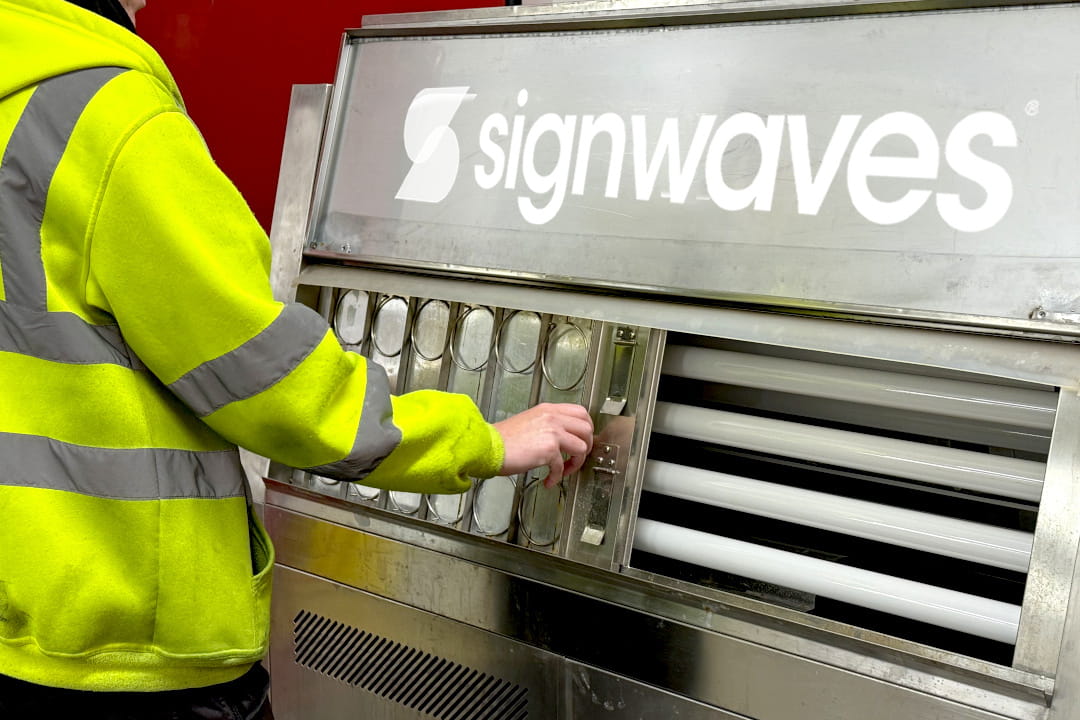
As specialists in outdoor signage and display a key piece of in-house equipment is our Accelerated Weather Testing Chamber.
Instead of waiting months or years to see how a material, decorative coating or printed substrate performs outdoors, we can use the test chamber to replicate extended outdoor exposure in a matter of days or weeks.
How the chamber and testing works
The test chamber subjects material samples to alternating, controlled cycles of 3 primary environmental elements at elevated temperatures:
- Ultraviolet (UV) Light: Special fluorescent UV lamps simulate the short-wave ultraviolet wavelengths of natural sunlight. This is the component of sunlight most responsible for physical material breakdown and colour fade.
- Condensation: A heating and vapour system creates 100% humidity. Hot water vapour condenses directly onto the test samples, mimicking overnight condensation.
- Water Spray (Rain): A cold water spray system drenches the materials. This simulates rain and induces thermal shock (sudden temperature drops) and mechanical erosion.
Exposing test samples to these intensified natural degrading factors, continuously and without interruption, provides us within weeks with a very good indication of how a material, print or product will perform over the course of years during its working life outdoors.
Without getting too technical it is important to mention the importance of having a correctly calibrated test chamber which compares its internal sensors against independent, certified reference standards to ensure precise control over light, temperature and moisture.
Because there’s so many variable factors in the outdoor environment that we are attempting to replicate it is impossible to equate a precise number of hours in the test chamber to a number of years outdoors. There’s a big difference for example in the impact of UV exposure on a sign mounted on a south facing wall than one facing north. There’s a big difference too in the impact from rain and moisture in somewhere like the Lake District (average 2000mm a year) and Norfolk where we get no more than 700mm on average.
As a rule of thumb we know from experience that 300 hours roughly equates to 1 year outdoors in the UK. But, rather than trying to find an absolute conversion time, we generally adopt a Comparative Testing method recommended by international labs and testing facilities such as that at Sheffield Hallam University. This involves running the test sample alongside a control material of known, proven outdoor performance in the UK. If the control material is known to last say for 5 years, and it fails at 2000 hours in the test chamber, we can reliably deduce that 400 hours in the chamber equates to 1 year outdoor life in the UK.
Checking & Verifying Material and Print Combinations
With print being a very important part of what we do at Signwaves being able to evaluate how ink and substrates perform together is critical. Accelerated weather testing helps with:
- Predicting ink adhesion: Testing indicates, for example, if a rigid substrate expands under heat at a different rate than the cured ink layer, potentially revealing if the print is more likely to crack, flake or peel.
- Exposing any impact of plasticiser migration: Testing forces chemicals in flexible vinyls, eg banner materials, to surface quickly and to check what impact if any they have on the ink bond.
- Measuring colour fastness: Following intense UV exposure we can use a spectrophotometer to measure colour change.
- Detecting physical degradation: Testing exposes whether a rigid plastic or board material will turn brittle, warp or discolour.
In short, accelerated weather testing helps us ensure long-tern ink adhesion, substrate stability and colour fastness for our outdoor signage and displays. The process is crucial to help prevent expensive field failures, validating new materials and protecting both Signwaves and our customers brand reputations.
Other benefits
In addition, accelerated weather testing helps with speed to market and provides empirical data to back up outdoor durability guarantees.
If you would like any further information about our accelerated weather testing capability, or how this could be used to help you with you resolve your outdoor signage and display decisions please do not hesitate to get in touch


